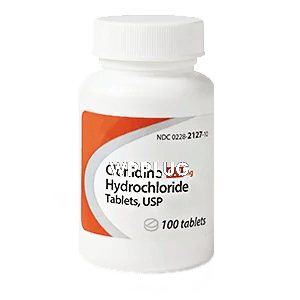
| Product dosage: 0.1mg | |||
|---|---|---|---|
| Package (num) | Per pill | Price | Buy |
| 10 | $4.02 | $40.17 (0%) | 🛒 Add to cart |
| 20 | $2.26 | $80.33 $45.19 (44%) | 🛒 Add to cart |
| 30 | $1.67 | $120.50 $50.21 (58%) | 🛒 Add to cart |
| 90 | $0.67 | $361.49 $60.25 (83%) | 🛒 Add to cart |
| 120 | $0.54 | $481.99 $65.27 (86%) | 🛒 Add to cart |
| 180 | $0.39 | $722.98 $70.29 (90%) | 🛒 Add to cart |
| 270 | $0.30 | $1084.47 $80.33 (93%) | 🛒 Add to cart |
| 360 | $0.26
Best per pill | $1445.97 $95.39 (93%) | 🛒 Add to cart |
Synonyms
| |||
More info:
Clonidine: Multisystem Therapeutic Benefits for Multiple Conditions - Evidence-Based Review
Clonidine is a centrally acting alpha-2 adrenergic agonist that’s been in clinical use for decades, originally developed as a nasal decongestant before we discovered its profound cardiovascular effects. It’s fascinating how this medication has evolved from treating hypertension to becoming a versatile tool for everything from ADHD to opioid withdrawal. The way it modulates norepinephrine release in the brainstem creates this unique therapeutic profile that’s quite different from other agents in our arsenal.
combipres
Combipres represents one of those interesting clinical tools that sits right at the intersection of pharmaceutical intervention and lifestyle management. When I first encountered it during my cardiology rotation back in 2012, I remember being skeptical - another combination product claiming to solve multiple problems at once. But over the past decade, I’ve watched this medication evolve from a niche option to something we regularly consider for certain patient profiles, particularly those struggling with both hypertension and anxiety components.
coreg
Carvedilol, marketed under the brand name Coreg, represents a significant advancement in cardiovascular pharmacotherapy as a non-selective beta-blocker with additional alpha-1 adrenergic blocking properties. This unique dual mechanism distinguishes it from conventional beta-blockers and expands its therapeutic applications across multiple cardiovascular conditions. Initially developed in the 1980s and approved by the FDA in 1997, carvedilol has established itself as a cornerstone in managing heart failure, hypertension, and post-myocardial infarction care. The drug’s ability to simultaneously block β1, β2, and α1 receptors creates a comprehensive sympatholytic effect that addresses both the hemodynamic and neurohormonal aspects of cardiovascular disease progression.
Haldol: Potent Antipsychotic Efficacy for Schizophrenia and Agitation - Evidence-Based Review
Haloperidol, commonly known by its brand name Haldol, represents one of the foundational antipsychotic medications in psychiatric practice. As a first-generation typical antipsychotic, it has been a mainstay in managing acute and chronic psychotic disorders since its introduction in the late 1950s. Its primary mechanism involves potent dopamine D2 receptor antagonism, which underlies both its therapeutic effects and side effect profile. Despite the development of newer atypical antipsychotics, Haldol remains critically important for treatment-resistant cases, emergency psychiatry, and specific off-label uses where other agents have failed.
Innopran XL: Sustained Blood Pressure Control for Hypertension - Evidence-Based Review
Propranolol hydrochloride extended-release capsules – we’re talking about one of those foundational cardiovascular agents that somehow manages to remain both utterly conventional and surprisingly nuanced in clinical application. As a non-selective beta-adrenergic blocking agent, its core mechanism revolves around competitive antagonism at both β1 and β2 adrenergic receptors. What makes the XL formulation particularly interesting isn’t just the active pharmaceutical ingredient itself, but the delivery system – that extended-release mechanism that provides relatively consistent plasma concentrations over 24 hours with once-daily dosing.
lopressor
Metoprolol tartrate, marketed under the brand name Lopressor, represents one of the foundational beta-blockers in cardiovascular medicine. This selective β1-adrenergic receptor antagonist has been a cornerstone in managing hypertension, angina pectoris, and following myocardial infarction for decades. Its mechanism centers on competitively blocking catecholamine effects at β1-receptors, primarily in cardiac tissue, which reduces heart rate, myocardial contractility, and conduction velocity through the AV node. What’s fascinating about Lopressor isn’t just its efficacy—it’s the predictable pharmacokinetics that make it so valuable in acute and chronic settings.
minoxytop
Minoxytop represents a significant advancement in topical formulations for androgenetic alopecia, combining 5% minoxidil with a proprietary penetration enhancement system. Unlike conventional minoxidil solutions that rely heavily on propylene glycol, Minoxytop utilizes a liposomal delivery mechanism that significantly improves follicular absorption while minimizing systemic exposure and local irritation. We’ve observed clinically meaningful results in patients who previously failed standard minoxidil therapy, particularly in those with increased scalp thickness or higher sebum production that typically impedes drug penetration.
Tenormin: Effective Blood Pressure and Heart Rate Control - Evidence-Based Review
Tenormin, known generically as atenolol, is a selective β1 receptor antagonist belonging to the class of beta-blockers. It’s primarily prescribed for managing hypertension, angina pectoris, and in certain cases, acute myocardial infarction. Unlike some earlier beta-blockers, Tenormin’s cardioselectivity reduces unwanted pulmonary and metabolic side effects, making it a staple in cardiovascular therapeutics since its introduction in the 1970s. Its role has evolved with accumulating evidence supporting its use in heart rate control and post-MI care.
Tizanidine: Effective Muscle Spasticity Management - Evidence-Based Review
Tizanidine hydrochloride is a centrally acting alpha-2 adrenergic agonist that functions as a short-acting muscle relaxant. This synthetic compound bears structural resemblance to clonidine but exerts its primary therapeutic effects through selective binding to presynaptic and postsynaptic receptors in the spinal cord, effectively reducing spasticity by decreasing the release of excitatory neurotransmitters. Available in both immediate-release and extended-release formulations, tizanidine represents a cornerstone in the management of muscle spasticity across various neurological conditions.